
Industrial facilities management isn’t just about keeping the lights on; it’s about ensuring the heavy machinery overhead doesn’t become a hindrance to safety or compliance. In high-traffic warehouses and logistics hubs, commercial doors serve as the primary gateways for revenue, yet they remain one of the most overlooked mechanical assets on the balance sheet. When these massive steel barriers fail, the impact goes beyond repair costs. Breakdowns can lead to compliance concerns, operational disruptions, and even property damage. Understanding where these systems fracture is at the forefront of insulating a business from unnecessary risk.
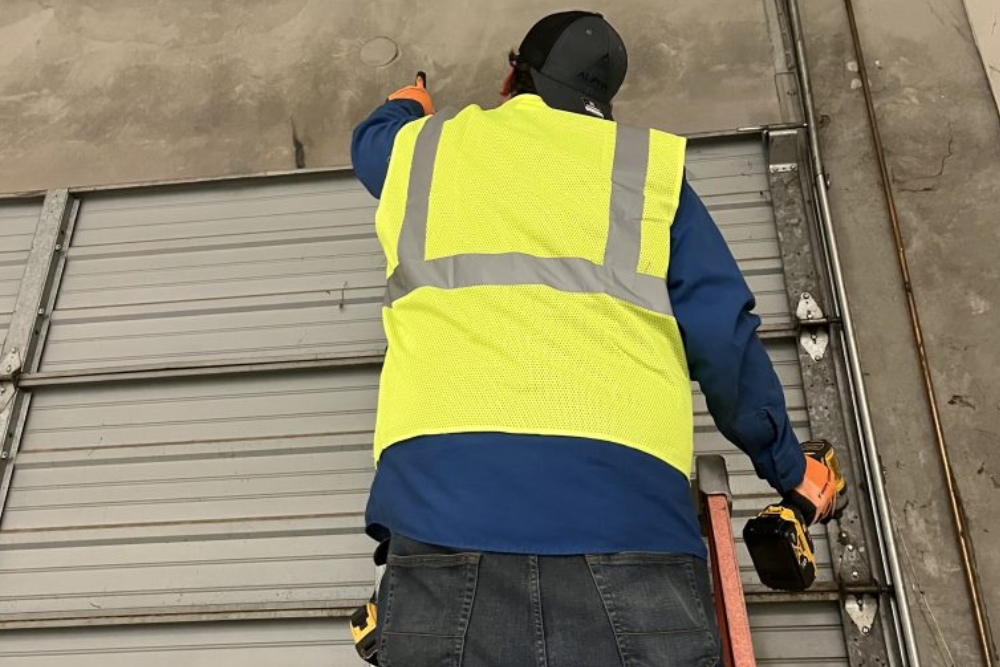
Fatigued Counterbalance Springs
The heavy lifting of a thousand-pound sectional door isn’t done by the motor; it’s done by the torsion springs. These tightly wound coils store a significant amount of kinetic energy. Metal fatigue is a gradual but serious concern in these components. Every cycle creates microscopic fissures in the steel until the material reaches its elastic limit.
When a spring snaps, the door becomes a dead weight. If the safety bottom brackets aren’t primed to lock, the entire slab can plummet toward the concrete floor with sudden acceleration. For any professional managing a floor, checking for spring gap or rust buildup is a necessary step in preventing mishaps. A broken spring doesn’t just halt operations; it potentially turns a common exit into a zone of falling debris.
Track Misalignment and Operational Risk
Steel tracks guide the door’s movement and ensure smooth travel. However, forklifts have a knack for clipping vertical tracks during frantic loading shifts. Even a minor dent or a three-degree shift in alignment creates a friction point that stresses the entire lifting assembly.
A misaligned track forces the rollers to grind against the mounting brackets. This resistance makes the motor work overtime, heating up the windings and leading to premature electrical failure. A derailed roller can cause the door to hang precariously by a single cable. This cocked door scenario requires immediate attention. It places uneven torque on the shaft, which can pull the entire assembly out of the header. If mounting hardware fails, inspections will often examine whether track damage or wear was identified and addressed in time.
Auto-Reverse System Malfunctions
Safety sensors and pneumatic bottom edges are the primary defense against crushing accidents. Compliance standards demand that a door must reverse its direction within two seconds of hitting an obstruction or breaking an infrared beam. Over time, vibration shakes these sensors out of alignment or dirt cakes the lenses, rendering them useless.
In many facilities, workers might bypass these systems to speed up workflow, a move that can increase liability. A door that fails to reverse properly becomes a non-compliant hazard. Weekly testing of these photo-eye sensors near the base of the door is a mandatory protocol. If the auto-reverse fails during an unplanned inspection or, worse, during an incident involving a pedestrian, the facility may face serious consequences.
Cable Fraying and the Snap Point
The aircraft-grade cables that pull the door upward are under constant tension. They often sit in damp corners or near loading docks where salt and moisture accelerate oxidation. Bird-caging— when individual strands of the wire beginning to unravel—is the precursor to a total snap.
Because these cables are often greasy, the fraying is hard to spot without a flashlight and a close-up view. Once a cable shears, the door’s weight shifts entirely to the other side, usually twisting the tracks and destroying the rollers in a fraction of a second. This type of imbalance happens quickly and can cause immediate operational disruption and equipment damage. If your maintenance team isn’t wiping down cables to inspect for burrs, they’re missing signs of a potential failure.
Developing a Hardened Maintenance Protocol
Reactive maintenance is risky and often more costly over time. To maintain compliance and protect personnel, a facility needs a proactive check-and-replace cadence. This means lubrication isn’t just sprayed haphazardly; it’s applied to the bearings, hinges, and rollers to ensure smooth kinetic transfer. It means bolts are torqued down to counteract the vibrations of a hundred daily cycles.
A facility’s doors are among its most important and frequently used mechanical systems. By treating them with the same technical scrutiny as a CNC machine or a fleet of trucks, operations teams can mitigate the risks of structural failure. Documentation is the final piece of the puzzle. If you didn’t log the inspection, the inspectors will assume it never happened. High-priority maintenance isn’t about fixing what’s broken; it’s about making sure the steel stays exactly where it belongs—safely overhead.
Justin Alquist is the owner and operator of Alpha Overhead Doors, which provides commercial door installation, repair, and maintenance solutions for dock doors in Phoenix and across Arizona.