
Amid rising costs and increased competition from e-commerce, many big-box retailers have chosen to close stores across the country, leaving behind large, vacant spaces. As pickleball’s growth accelerates nationwide, former big-box stores have emerged as some of the most attractive—and challenging—real estate opportunities for indoor pickleball facilities.
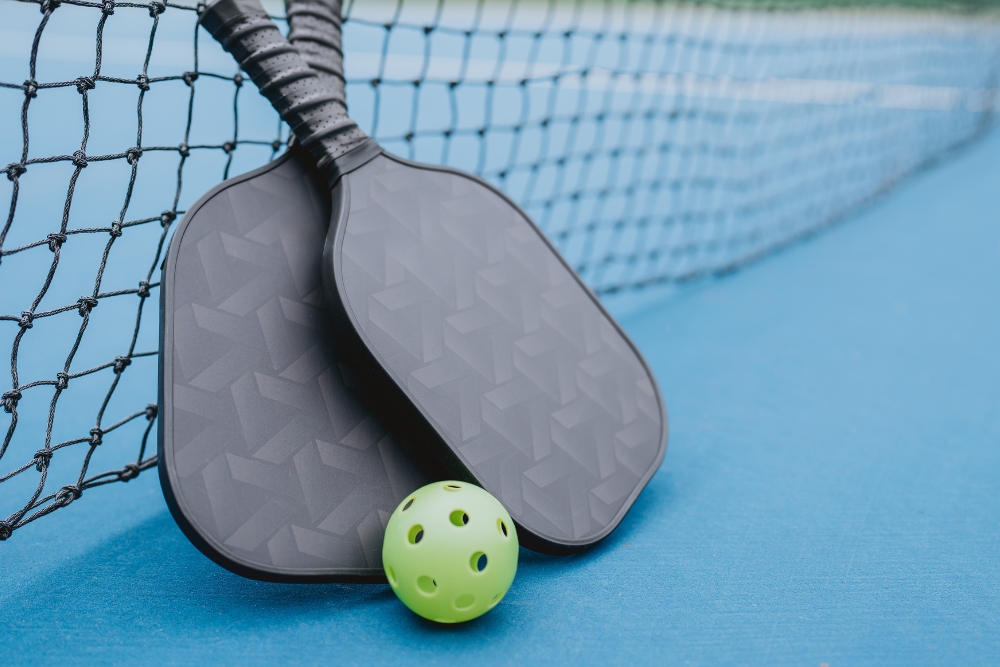
While these buildings offer scale, parking, and accessibility, converting them into high-performance athletic environments requires far more than striping courts and hanging nets. From structural feasibility to long-term scalability, facilities management plays a defining role in whether a conversion succeeds or struggles.
Start with the Structure: Not Every Box Is a Fit
When evaluating former retail spaces, two structural factors immediately determine viability: clear ceiling height and column spacing. Pickleball courts have fixed dimensional requirements, and insufficient overhead clearance or poorly placed columns can quickly eliminate a site from consideration.
Beyond the courts themselves, layouts must accommodate circulation corridors, safety buffers, and code-compliant egress paths. Fitting all of this into an existing shell often becomes a complex spatial puzzle. Even if the interior works, exterior considerations such as parking capacity and ease of access are equally critical, as they directly affect member experience and daily operational flow.
Flooring Is a Safety System, Not a Finish
In high-volume pickleball environments, flooring decisions are foundational. The process begins with the existing concrete slab, which must be evaluated for flatness and levelness. Many former retail floors require patching, grinding, or full leveling before any athletic surface can be installed.
Installing a cushioned court system can also help reduce joint impact and player fatigue during extended play, but courts are only part of the equation. Walkways and aisles must be durable, slip resistant, and easy to maintain. Offices and conference rooms benefit from sound-deadening carpet, while entryways require walk-off matting to prevent debris from migrating onto playing surfaces.
Ceiling Height, Lighting, and Acoustics Define the Experience
Converted retail spaces often come with hidden constraints overhead. Maintaining proper clear height above courts frequently requires retrofitting sprinkler systems and reworking HVAC distribution, an investment that is essential for both safety and playability.
Lighting is another major differentiator. Pickleball facilities must meet USA Pickleball and PPA standards for brightness, color temperature, and uniformity. Basic high bay lighting can create glare and uneven illumination, but indirect lighting systems designed specifically for racquet sports can produce consistent visibility without visual fatigue.
Acoustics are often underestimated. Pickleball is inherently loud, and when combined with concrete floors, hard walls, and metal ceilings, noise can quickly become overwhelming. Effective solutions include sound-absorbing ceiling baffles above courts, wall padding, and overhead banners, all of which significantly reduce reflected noise and improve comfort for players, spectators, and staff.
Infrastructure Upgrades Are Inevitable
From a facilities management standpoint, converting retail to recreational use typically triggers higher occupant load requirements under local building codes. This often necessitates expanded restroom capacity to remain compliant.
HVAC systems also frequently require upgrades, particularly to meet codes mandating increased outside air intake for athletic facilities. These improvements are not just regulatory; they are essential to maintaining a comfortable, healthy indoor environment that supports year-round play and high daily utilization.
Designing for Growth, Not Just Opening Day
The most successful pickleball facilities are designed with scalability in mind. Beyond courts, layouts should intentionally allocate space for amenities that support increased traffic and evolving programming, including welcoming reception areas, integrated retail pro shops, wide aisles between courts, clean and well-lit restrooms, changing areas, and dedicated event or party spaces.
Equally important are back-of-house considerations, including offices, conference rooms, and storage areas that allow staff operations to scale alongside membership growth. This holistic approach ensures facilities remain adaptable as player expectations rise and programming expands.
The Takeaway for Facilities Managers
Converting a big-box retail space into a pickleball destination is as much a facilities challenge as it is a real estate opportunity. Structural feasibility, flooring performance, acoustics, mechanical systems, and future-proof design all intersect at the facilities level. When these elements are thoughtfully addressed from the outset, former retail boxes can become vibrant, durable recreational hubs built to support the sport’s continued growth.
Chris Daiss is the vice president of real estate and construction at PickleRage, an indoor pickleball club franchise.