
If you’ve ever worked security at a stadium or festival, you know how those large-scale venues bring people together. The bad news, however, is that they also bring complex risks. The crowds are larger, so threats can appear faster. Our standby techniques, like gates and guards, can no longer get the job done on their own.
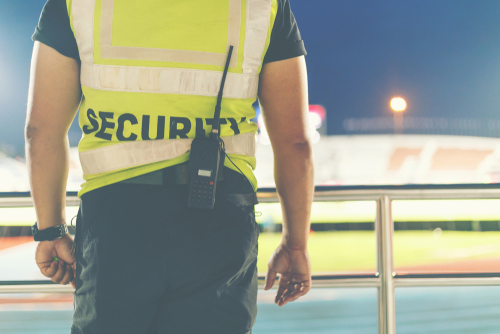
Today, we equip our teams with cutting-edge technology to fill the gap. Integrated physical and electronic security systems give us a much-needed view of what is happening across wide and busy spaces.
Changes in How Private Security Solutions Prevent and Respond to Incidents
There’s never a quiet moment at big events. People are constantly on the move, arriving and leaving in waves. In these constantly fluctuating conditions, a small issue can escalate quickly. A blocked exit can turn into a crush, and a confused crowd can turn into panic.
Your security team must see these changes and act before a problem becomes an emergency. But for this to happen, they need tools that show what’s going on in real time. What’s more, everyone on the team needs the same view at the same time.
An integrated security system begins with intelligence. AI software learns what is normal in a given venue. Some of its information comes from cameras and entry scans, and some from weather and social media posts. It then uses what it finds to establish patterns and spot abnormalities.
All signals flow into a single platform, where the system aggregates information such as radio calls and camera alerts to give leaders a single, shared picture. The screen in the command room matches the phone in a supervisor’s hand. Put simply? Everyone sees the same facts.
This shared view saves time. A dispatcher can find the nearest trained team member or share a live camera stream, and your teams can have maps and turn-by-turn directions given to them directly on their phones.
As new details arrive, your team can change tasks without missing a beat. Where you used to have a string of rushed calls, you now have one smooth response. The integrated system’s intelligence doesn’t make the decision; it just makes the decision clear.
The Growing Role of Integrated Physical and Electronic Security Systems
“Integrated” means that each component of your security system automatically communicates with every other part and with your team simultaneously. Take access control, for example. Rather than just opening doors, an integrated system shows how many people are in each area or space of a venue or facility, which allows operations to relieve pressure before it builds up.
Perimeter tools like fences and vehicle barriers connect to sensors and cameras, which is how a gate being forced open or unlocked, or an unexpected drone flying overhead, triggers an immediate response. Public information screens and mobile alerts are also hooked into the system so you can use targeted messages to guide crowds calmly during an event.
Integration also extends beyond the venue, allowing event organizers and multiple agencies to share a unified dashboard. When something happens, everyone starts from the same facts and follows the same playbook, which goes a long way to reduce delay and confusion.
Why Pairing Teams with Technology and Intelligence Is Elevating Risk Management
Clearer information supports better decisions. Although playbooks can suggest next steps when certain thresholds are met, it’s your security staff who remain in charge and apply context.
Your trained officers do what machines can’t: read the emotions in the room, calm any identified tension, show empathy, and make tough calls when the situation is messy. But technology reduces the noise so your teams can work at their best.
Picture what might happen with an integrated security system at a large outdoor stadium. Even before the gates open, teams gather all the available information about the venue and run simulations of crowd security.
Imagine the following scenario: On the day of the big event, rain begins to fall, and fans rush to the covered areas. Cameras show a concourse that’s growing more crowded by the second. When the map shifts from green to red, the system flags the area, and a supervisor sees an alert on her tablet. She sends two teams: one opens an extra gate, and the other sets a one-way flow with portable barriers. The command room posts a short message on the venue’s monitors, reminding people to keep moving and follow staff directions. The crowd spreads out, and the risk drops.
Security in high-risk environments needs an integrated system that helps teams see farther and act together, but protection still rests on experienced professionals. They use the tools to lead with judgment and uphold standards that technology can’t define.

Marcus Skeen is a seasoned security solutions executive with more than 20 years of experience leading complex security operations across Asia, Australia, and the United States. He currently serves as CEO of MJPSG Asia Pacific LLC and president and CEO of WGS Group, where he oversees large-scale physical security, risk management, and electronic security initiatives for clients across multiple industries.