
As a wildland firefighter who has spent multiple seasons on firelines across California and the western United States, I have seen firsthand that many commercial structures are lost to embers long before the main fire front ever reaches the building.
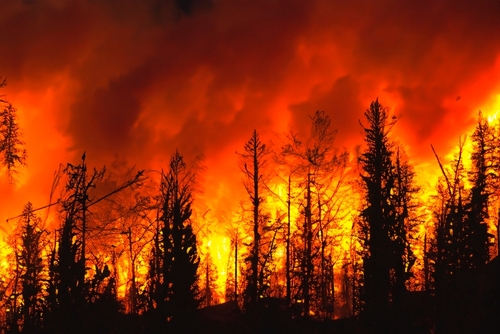
Recent data suggests that model is increasingly insufficient. Facilities managers are now operating in a wildfire environment that most emergency response frameworks were not designed around.
A Changing Fire Weather Baseline
A study published in Science Advances examined more than four decades of global climate and fire-weather records and found that the number of days when heat, drought, and high winds converge to produce extreme wildfire conditions has nearly tripled over the past 45 years. These conditions significantly increase the likelihood of long-distance ember transport, which is responsible for a large percentage of structural ignitions during major wildfire events.
What Strained Suppression Resources Mean for Your Facility
In several incidents, we have seen structures ignite when embers entered through rooftop HVAC systems, accumulated in debris on flat commercial roofs, or ignited materials staged near loading docks.
The honest reality from the field is this: When multiple incidents are active simultaneously, incident commanders and dispatch centers are making difficult triage decisions.
How Commercial and Industrial Structures Burn
These embers can travel miles ahead of the fire front and enter buildings through vents, roof openings, HVAC intakes, or small gaps in the building envelope.
Practical Mitigation That Scales to Commercial Reality
Facilities should routinely inspect rooftop HVAC intakes, ventilation louvers, roof penetrations, and utility entry points for potential ember pathways.
Planning for the Conditions That Actually Exist
Facilities that reduce their own ignition vulnerabilities before extreme fire weather arrives are far more defensible when emergency resources are stretched across multiple incidents.
Nicholai Allen is a wildland firefighter and the founder of SAFE SOSS, a company focused on helping homes and facilities reduce ember ignition risk. He continues to respond to wildfires as a federal resource when called.
ALSO READ: Back to Basics: 10 Ways to Prepare Your Facilities for Wildfires