
A building’s public safety communication system passes inspection. The certificate of occupancy stays intact, the fire marshal signs off, and the facilities team moves on. Twelve months later, the same system fails recertification. Nothing was touched. Nothing was changed. And yet, somewhere between last year’s pass and this year’s test, the building quietly lost coverage.
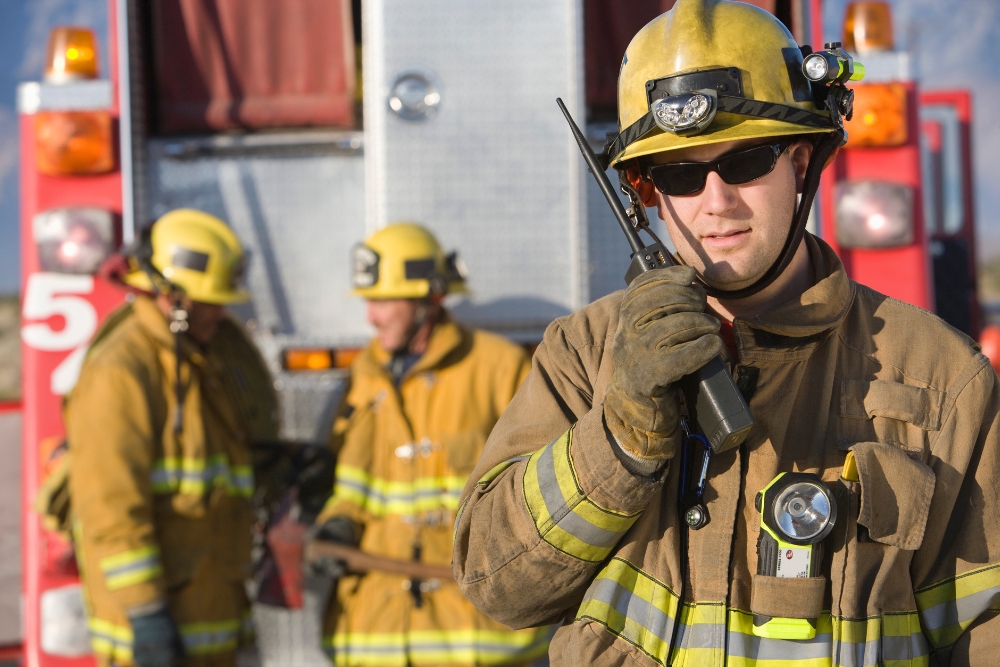
Scenarios like this are more common than most facility teams realize. Based on field data across U.S. markets, roughly one in 10 buildings with an Emergency Responder Communication Enhancement System (ERCES) experiences an unexpected failure during annual recertification. The causes are rarely dramatic. They are small, cumulative, and almost always preventable with the right monitoring habits.
Under NFPA 1225 and International Fire Code (IFC) Section 510, ERCES must be inspected and tested at least once every 12 months to verify coverage, signal strength, battery backup, and fault monitoring. That annual window is long enough for a building to drift out of compliance in ways that are invisible from the lobby, but very visible on a grid test.
The Three Quiet Culprits
Most surprise failures trace back to one of three causes. None of them announce themselves.
The first is heat. Bi-directional amplifiers (BDAs), the active component at the heart of most ERCES installations, are sensitive to ambient temperature. When they are installed in tight electrical rooms, above drop ceilings, or in mechanical spaces where airflow has changed since commissioning (for example, after a new server rack or new HVAC routing was added nearby), operating temperatures can creep above specification. Amplifier gain drops, components degrade faster, and in some cases, the unit throttles itself to avoid damage. Coverage measured within code at commissioning no longer meets the signal strength floor of -95 dBm in critical areas such as stairwells, fire command centers, and exit passageways.
The second is internal interference. Buildings change. Tenants build out new suites, demising walls go up, metal-studded partitions get added, and dense storage gets introduced. Each of these changes alters how radio frequency signals propagate through space. A floor that had clean coverage a year ago may now have attenuation pockets where firefighter radios will not penetrate. The antennas have not moved, but the building around them has.
The third, and often the most frustrating, is external interference. A new high-rise going up next door, a retrofit on the adjacent block, or even a tree-removal project can change the donor signal environment in ways no facility team would think to track. When the donor antenna’s line of sight to the public safety tower is degraded, the amplifier may be forced to work harder, introduce noise, or in some cases, oscillate and shut itself down. In dense urban markets, this is not hypothetical. It is happening in active construction corridors right now.
What Failure Actually Costs
The consequences of a failed recertification vary by jurisdiction, but none are minor. Authorities having jurisdiction (AHJs) can issue notices of violation, impose daily fines that accrue until the deficiency is corrected, require costly third-party re-verification, and in the most serious cases, restrict occupancy or revoke the certificate of occupancy entirely. Tenant move-ins can stall. Lease revenue can pause. Insurance exposure grows.
The life-safety consequences are harder to quantify and more important. ERCES is classified as a life-safety system for a reason. When firefighters enter a basement, a concrete stairwell, or a shielded mechanical room and their radios go silent, seconds matter. A system that quietly falls out of compliance between annual tests is a system that would have failed when it mattered most.
What Facility Teams Can Do Before the Next Inspection
Annual testing is the floor, not the ceiling. Facility teams that treat the 12-month inspection as their only checkpoint are, by definition, discovering problems at the worst possible moment. A handful of practical habits make surprise failures far less likely:
- Confirm that the ERCES annunciator panel is actively monitored and that alarm conditions are reviewed, not just acknowledged. NFPA 1225 requires supervisory monitoring for loss of AC power, low battery, antenna faults, and amplifier trouble. These alerts are the system telling you something is wrong months before the fire marshal does.
- Treat the BDA equipment room as critical infrastructure. Check ambient temperature, keep the space clear, and flag any HVAC or construction work nearby that could change airflow. If temperatures routinely run hot, address it before the annual test, not after.
- Document building changes that could affect coverage. New interior buildouts, new metal partitions, and changes to the exterior envelope are all worth noting in the ERCES file. So is adjacent construction, even when it is not on your property. If a new tower is going up next door, the donor signal environment is going to change.
- Finally, consider a mid-cycle performance check. A six-month walk-through with a certified technician, using calibrated equipment, will surface drift long before it becomes a failure. It is a fraction of the cost of a failed recertification and a fraction of the exposure of a public safety system that is not ready when it is needed.
The buildings that pass year after year are not lucky. They are the ones whose facility teams treat ERCES as a living system, not a commissioning milestone. Everything else is a surprise waiting to happen.
Amanda Schomisch is an engineering compliance specialist at Airtower Networks, an in-building wireless infrastructure company specializing in public safety (ERCES), cellular DAS, and managed Wi-Fi systems. She works directly with facility teams, general contractors, and AHJs to verify code compliance and keep life-safety communication systems operational year over year.