
Employee discomfort, rising energy bills, and an HVAC system that’s constantly working overtime are common challenges in large facilities, with poor air circulation being the leading factor. Facilities that incorporate HVLS (high-volume, low-speed) fans can balance temperatures, improve occupant comfort, and reduce operating costs without requiring infrastructure alterations.
The HVAC Is Running, and the Space Is Still Uncomfortable
High-ceiling facilities experience uneven temperatures and hot spots on the floor, despite the HVAC running constantly. The problem isn’t necessarily the HVAC system, but more about how air moves or doesn’t move throughout a space. Sweating slab syndrome (SSS) and sick building syndrome (SBS) are two common air-quality-related employee safety and comfort issues that facilities managers face. SSS occurs when moisture slowly develops on the surface of an interior concrete slab, such as a warehouse floor. This can make the surface slippery, posing a serious safety risk to workers. SBS is an acute health and comfort effect experienced by building occupants that appears to be linked to time spent in the building. Both of these are primarily caused by stagnant air.
This discomfort directly impacts overall employee health, productivity, and energy costs associated with the building. Increasing air movement and ventilation in a building often provides a dramatic improvement. HVLS fans can help eliminate these health and safety risks by minimizing ceiling-to-floor temperature imbalances and increasing the evaporation rate. Industrial ceiling fans can also disperse the buildup of airborne contaminants such as chemical fumes, pollen, bioaerosols, or other organic compounds.
Why Large Facilities Struggle With Airflow
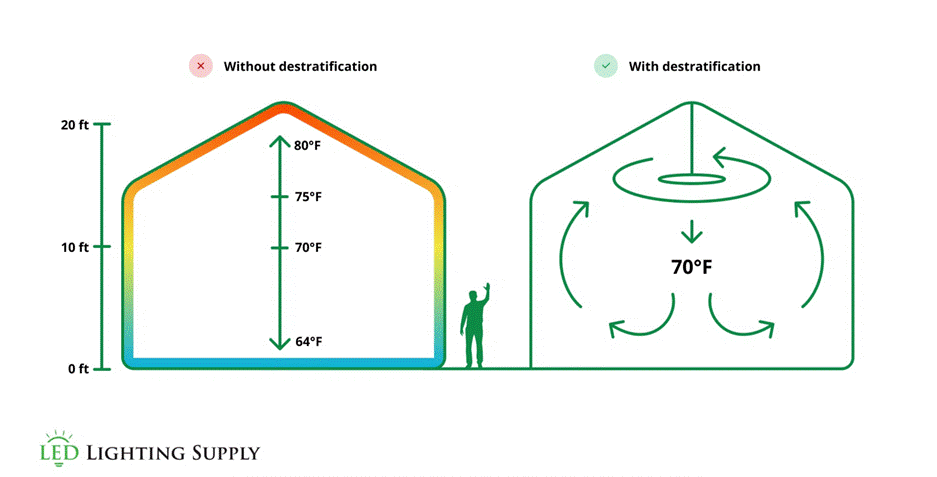
Warm air has a natural tendency to rise while cool air sinks. This creates an organized separation of air pockets in enclosed spaces, a phenomenon known as temperature stratification. Stratification is most common in spaces with high ceilings and open layouts, especially warehouses, manufacturing plants, schools, gyms, and similar environments that struggle the most to maintain consistent temperatures.
What HVLS Fans Do & Why It Matters
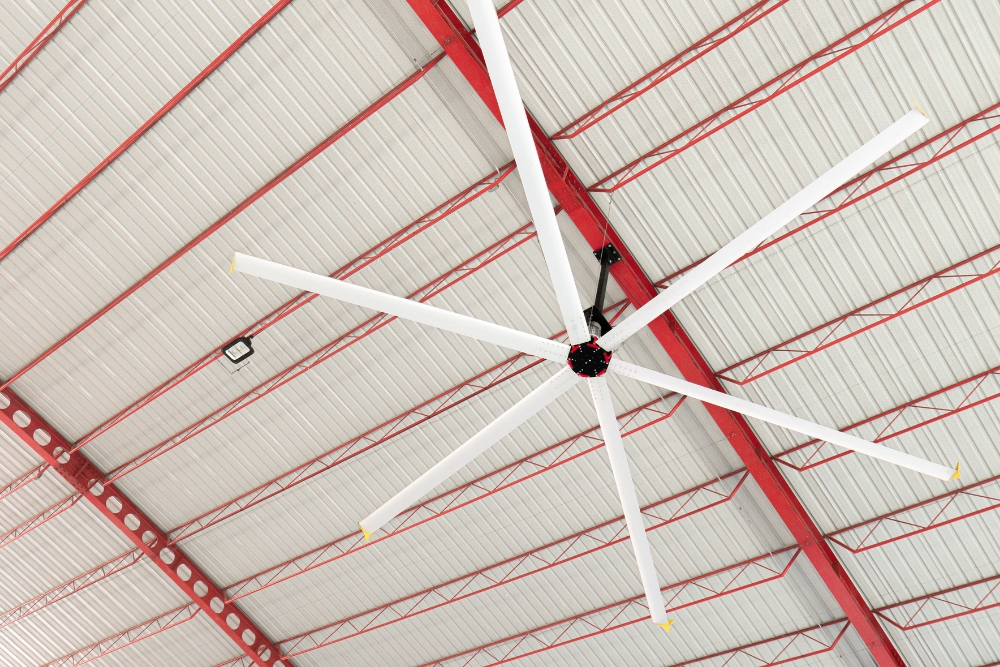
HVLS fans move large amounts of air rapidly yet quietly across open floor layouts. During operation, these fans create destratification, a process that offsets the effects of stratification by efficiently blending warm and cool air. Incorporating HVLS fans allows facilities to meet heating and cooling demands without sacrificing worker comfort. When HVLS fans are installed, system stress and frequent repair costs are reduced, maximizing ROI for facilities.
The Cost of Poor Air Distribution
HVAC operations account for a large portion of the world’s overall energy usage. Usage in the United States is responsible for approximately 13% of global energy-related emissions each year. Energy consumption by facility HVAC systems accounts for about 8% of total electricity use at U.S. manufacturing facilities. Legacy or oversized HVAC systems cycle on and off frequently, wasting more energy and creating additional load. Implementing HVLS fans into a space won’t completely fix a struggling HVAC system, but using them in conjunction can extend the lifespan of the system while reducing energy costs. We have found that integrating HVLS fans with existing HVAC systems can typically reduce cooling costs by 30-40% during summer months and heating costs by up to 20% in winter due to improved air circulation.
More Building-Wide Integration Opportunities
Workplace comfort and facility savings have many contributing factors to consider, but the following integrations are the most overlooked: LED lighting produces less heat than traditional lighting. Lighting controls, like motion sensors, cut unnecessary runtime across all systems. In turn, all of the savings stack up. The biggest efficiency gains come when airflow, lighting, and controls are evaluated together, not in isolation. Facilities managers who take that coordinated approach see stronger ROI and a measurable impact on employee performance.
Brianna Sapienza is a content marketer at LED Lighting Supply, a commercial, industrial, and sports lighting solutions provider.