
Every construction project generates a large volume of critical information including drawings, O&M manuals, submittals, commissioning reports, warranties, and test records. Once the project is complete, that data often gets scattered or never fully makes its way to the facilities team.
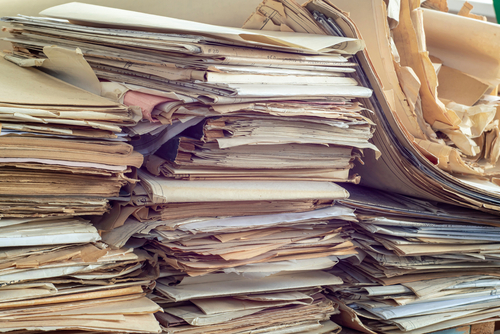
As Paul Petroski, a senior facilities leader with the Department of Defense, noted, “Drawings tell you what was intended to be installed, but the commissioning reports, submittals, and O&M manuals tell you what was actually installed and how it is supposed to operate.”
When full records are available, they also help technicians transfer knowledge across systems. Boilers and chillers, for example, operate on different energy sources but follow the same core physics. Understanding one builds a foundation for understanding the other.
Still, incomplete or disconnected records create real operational risk. “Incomplete documentation increases the likelihood of design conflicts, unforeseen field conditions, schedule delays, change orders, and cost overruns,” Petroski added.
In regions like South Florida, where facilities face hurricanes, flooding, salt air, and heavy year-round use, access to complete documentation becomes even more critical, according to Alex Cajigas, director of business development at 1NSG Corp. Missing or delayed information can slow down repairs, extend outages, and increase costs.
“The biggest impact is not always the repair itself, but the delay caused by trying to locate information that should have been readily available,” Cajigas explained. “A repair that could have been completed the same day can easily turn into several days of investigation, coordination, and additional expense.”
There is also growing recognition that construction records shouldn’t be treated as archival files, but as operational assets that support the full lifecycle of a building. As systems become more complex, the need for accurate, accessible information increases. That shift also changes how organizations manage information. Instead of treating drawings, manuals, and commissioning records as files that are stored away after construction, many are centralizing them into a single operational resource that technicians can use every day. Software platforms can help connect drawings with equipment documentation and other critical records so information remains useful long after project closeout.
One director of engineering overseeing a major hotel renovation emphasized ensuring his team received updated as-builts reflecting every change. The concern was future repairs, renovations, and emergencies, where accurate records would save time and reduce uncertainty.
Organizations that keep this information connected and accessible as part of daily operations are better positioned to reduce downtime, control costs, manage risk, and respond effectively when issues arise.
One of the biggest risks is time management. While it sometimes feels like days pass slowly and years pass quickly, you’ve got to examine every minute closely in facilities management.
When teams can’t quickly locate the documents needed to troubleshoot equipment, verify warranties, or plan repairs, there are going to be future pains.
“Every hour spent searching for information is time that equipment remains offline, occupants are inconvenienced, or operations are disrupted. Organizations may unnecessarily hire consultants, perform exploratory work, purchase incorrect replacement parts, or miss warranty opportunities,” Petroski said. “The risk extends beyond financial impacts and can affect safety, regulatory compliance, and business continuity. In my experience, the inability to quickly access accurate documentation often turns routine maintenance activities into complex and expensive projects.”
A major healthcare system provider campus in Portland, Ore., includes 11 buildings and three parking garages, totaling approximately 1.7 million square feet. The facilities range from a historic house to several main operating rooms. The oldest building, the main tower, was built in 1968, while the newest building opened in 2006. In 2014, they began a major renovation of the main tower, a project that lasted five to six years.
The director of facilities explained that when critical equipment fails, there’s no time to search for operations and maintenance manuals. The priority is to identify problems, restore services, replace or bypass the equipment if necessary, and stabilize operations. Once the immediate issue is under control, teams can plan shutdowns, locate the O&M documentation, and complete the repairs. In some cases, automated backup systems take over while facility leaders assess critical situation.
In many facilities, manuals are on someone’s desk, on tool carts, or next to another piece of equipment where technicians were reading it to troubleshoot. The human factor is the most difficult to control. By any measure, AI is certainly a help so that technicians can aggregate large amounts of data and pull manuals in seconds.
The Portland healthcare facilities team leader said, “In a shop of our age and our complexity, do I have the 1968 manuals for all of our equipment rooms? Yes, but if I have to spend three hours searching for one line of information in a manual, then that’s a massive waste of time. I could have just pulled the broken part and replaced it.”
To start changing the information and documentation mindset in healthcare and other industries, start by capturing checklists and standard operating procedures, then move onto using videos to illustrate complicated troubleshooting situations. You’ll want to keep all team members in the loop as change is constant, impacting different departments in different ways.
“Facilities get more complex every year, and the teams keeping them running need that information at their fingertips, not in a filing cabinet,” said Peter McCaul from Exact Comms about how facilities should engage with their own information.
Jack Rubinger is a content writer for facility solutions provider ARC Facilities. He has more than 20 years of building, technology, healthcare, higher education, and workplace safety writing experience. He can be reached at jack.rubinger@arcfacilities.com.