
Heat waves are arriving earlier and lasting longer. According to NOAA’s National Centers for Environmental Information, 2025 was the fourth-warmest year on record for the U.S., with average temperatures 2.6°F above the 20th-century average.
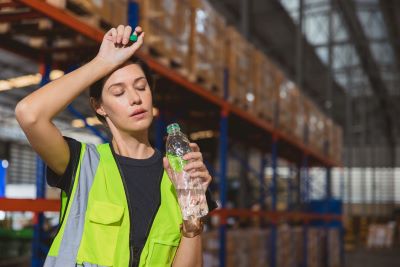
With rising temperatures come increased risks to the workers caught in them—particularly those in the labor-intensive manufacturing and distribution industries. Heat is now one of the most persistent hazards facility leaders face, and it’s more than a seasonal issue. Managing heat safety is a year-round operational and legal requirement that becomes exacerbated during seasons of extreme heat.
Recognizing the growing risks of workplace heat exposure, OSHA recently expanded its Heat National Emphasis Program (NEP) on heat hazards to target 55 high-risk industries, including indoor workplaces. Equipment, machinery, and physically demanding labor generate sustained heat even in climate-controlled buildings, putting those employees at just as much risk as those working outdoors.
Since first launching its Heat NEP in April 2022, OSHA has conducted thousands of heat-related facility inspections and issued numerous heat citations. Some estimates indicate the organization has issued upwards of $2 million in heat-related penalties in a single year. And while a federal standard for workplace heat safety is still under review, several states have enacted their own laws governing occupational heat exposure. For example, California regulators cited a Safeway distribution center for failing to protect approximately 1,700 employees from indoor heat hazards (among other issues) at the beginning of last year.
The result of ignoring heat safety is costly in more ways than one. Beyond obvious health risks, extreme heat has a massive impact on business continuity. The World Health Organization reports that worker productivity declines by 2-3% for every degree increase above 68°F.
To maintain standards that meet both compliance needs and worker safety, leaders need to approach heat preparedness as a workplace design challenge, not just a reactive measure.
Make Hydration Accessible All Day
Hydration is often treated as a breaktime activity, rather than part of the workday. According to the U.S. Bureau of Labor Statistics, only 40.5% of production workers can take short, unscheduled breaks throughout their shift. Compound that with the fact that most water stations are typically located in breakrooms and farther away from production lines, loading docks, and fulfillment areas, and you have a situation in which workers are not taking time to hydrate.
To design a solution, facility leaders should consider high-traffic areas, poll staff, and review usage patterns to pinpoint preferred hydration station locations. This data will reveal where access breaks down and paint a clear picture of where redesigns must take place.
Avoid the Restocking Burden
While access to hydration solves a key challenge for workers, facilities managers are still faced with the waste and administrative hurdles that come from restocking beverage options. Historically, this process involved having to order massive quantities of bottled water and electrolyte drinks each month, or hand-mixing electrolytes into large water gallons. It’s time-consuming, expensive, and in many ways, messy.
That’s why most operations leaders are exploring modern beverage machines that leverage existing water lines to provide filtered, high-quality hydration. Many of these machines include options for adding electrolytes or vitamins to drinks, allowing workers to customize their beverages while maximizing the wellness benefits. This eliminates costly restocking while ensuring employees always have readily available options for staying hydrated.
Build Heat Preparedness into Daily Operations
With hydration as the baseline, facilities managers should also consider operational and compliance-oriented changes that will ensure safer and more productive workplace environments in the face of rising temperatures. Those include:
- Scheduling hotter work during cooler hours to shift physically demanding tasks to early mornings or late evenings when temperatures are lower.
- Increasing break frequency or duration to ensure workers get adequate recovery during periods of intense heat.
- Rotating tasks and adjusting schedules to limit continuous heat exposure while still ensuring the work gets done.
- Understanding the heat thresholds that apply to each site, indoor and outdoor, and building monitoring systems around them, rather than relying on workers to report discomfort.
- Documenting program details and effectively training workers on policies—a gap that Safeway was cited for last year.
Amazon’s recently updated standards are an example of this in practice. In response to employee feedback on warehouse conditions, they’ve invested heavily in climate-controlled facilities and delivery vehicles; cooling gear; electrolytes, and advanced hydration stations; and weather monitoring. The combination of solutions is an approach other facility leaders should strongly consider as they seek to create safer and more productive working environments.
Proactivity Is the Key to Heat Preparedness
Hydration is not the only solution to deterring heat-related workplace risks, but it is often the most overlooked. Prioritizing accessible beverage options can be a difference maker in an industry that will continue to navigate increasingly dangerous temperatures and their impact on workplace conditions.
The facilities that will continue to thrive during this period are those that start with an assessment of where access to hydration is breaking down on the floor. Those who choose to remain reactive will be the ones making headlines for heat-related safety citations and the resulting costly fines.

Matt Gannon has served as chief operating officer of smart beverage dispenser company Bevi since December 2023, bringing deep operational leadership experience from his time at Markforged, where he held a series of roles culminating in senior vice president of operations. At Markforged, he led the global operations team and helped scale manufacturing, supply chain, and service functions from early stages through IPO. Before Markforged, Gannon worked at Newell Rubbermaid as a global sourcing manager, leading sourcing and procurement initiatives. At Bevi, Gannon oversees the company’s operational functions as it continues to scale its growth across the U.S., Canada, U.K., and Ireland.