
Data centers support every digital interaction around the world. The hardware in these buildings must run continuously, stay cool under immense load, and remain secure around the clock. As demand accelerates, so does the complexity of the data centers that enable it. This places new pressure on the facilities management teams and other stakeholders responsible for building data centers and keeping them operational.
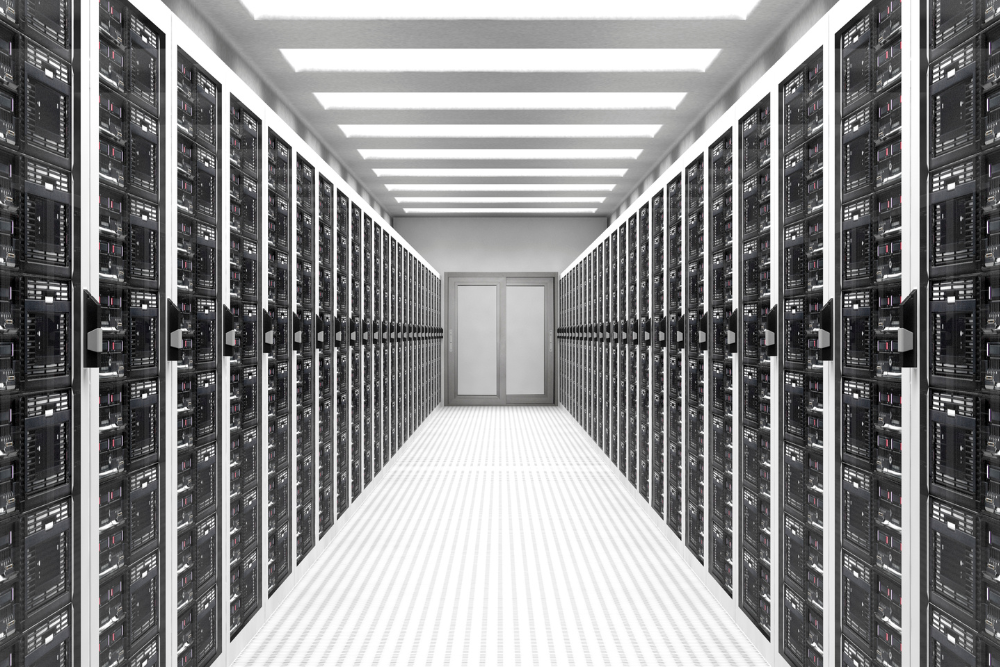
Artificial intelligence (AI) infrastructure spending has already surpassed office construction. Across the U.S., about 1,240 data centers are now operational or approved, almost four times the number in 2010. Amazon, Meta, Microsoft, and Google plan to spend hundreds of billions on AI infrastructure over the next few years, most of it directed toward new data centers and GPU clusters.
The construction sector is struggling to keep up. Facilities are becoming larger and more specialized, and the preconstruction work required to validate cost and design is extending project schedules. Most recently, some industrial and data center projects have paused due to supply-chain cost uncertainty. Analysts say the industry may fall short of the capacity needed to meet accelerating demand without broader adoption of construction project management and portfolio-based planning.
Where Complexity Becomes Long-Term Risk
From a facilities manager’s perspective, the biggest challenges lie in the final stages of construction. About 80% of a typical data center follows familiar steps that include site work, concrete, steel, utilities, and enclosure. The remaining 20%, however, defines how the facility will perform and how reliably it can operate. The power, cooling, and mechanical systems that support servers are highly specialized. They must run continuously and with little room for error.
A data center functions like a high-performance engine that requires careful balance between power load, temperature, and connectivity. Even small design issues or sequencing mistakes can create delays during commissioning, the structured process of verifying a building’s systems work exactly as they were intended before going live. Commissioning for data centers can account for 10-20% of the entire project schedule because teams must simulate full IT loads and test tightly interdependent mechanical and electrical systems under real conditions. When issues surface late, they can lead to operational problems that extend well into the life of the facility.
These performance and commissioning issues sit within a wider landscape of technical and logistical hurdles that facility teams must navigate. As demand grows, securing essential components such as transformers and cooling modules has become more difficult and requires long lead times for delivery. Power availability is a major consideration and now determines whether a project can even be built. Early visibility into planning and sequencing becomes essential long before the first piece of equipment is turned over from the construction team to the facility team.
Why Operators Are Turning to Portfolio Thinking
Major operators are moving from a project-based approach to a portfolio-based approach in order to manage the scale and speed expected in this new era. Some organizations are building at a pace where treating each facility as an isolated effort is no longer sustainable. Coordinating dozens of builds, each with its own regulatory hurdles, equipment requirements, and timelines, requires viewing the entire program as one connected system.
This change in approach enables operators to standardize the predictable 80% of construction while focusing specialized expertise on the final 20%. For facilities managers, this creates more consistent operational baselines and more predictable transitions from construction to operation. It also ensures that decisions made early in design or procurement align with real-world operational needs instead of forcing teams to adapt after the fact.
The Growing Need for Visibility and Public Confidence
Many organizations still rely on disconnected spreadsheets, isolated updates, and manual communication to manage projects, which limits overall visibility and makes it nearly impossible to manage a large portfolio with consistency. Critical information often moves slowly or gets buried, which means downstream teams are left planning against assumptions that are no longer accurate. Facilities managers often discover the impact of this disconnected approach only after handoff when equipment arrives late, systems aren’t aligned with the original sequence, or commissioning timelines have already slipped. By the time these gaps surface, the cost and risk are much harder to manage.
A connected, portfolio-based digital environment helps prevent these issues by linking cost, schedule, risk, and field data in real time. When information flows freely across teams, leaders can respond to capacity constraints, adjust sequencing, and make informed decisions before problems escalate. One site can slow without stopping another, and materials can move to where they’re needed most.
As data center development expands into more communities, public confidence has become almost as important as internal performance. Communities also expect transparency around timelines and potential disruptions. A PMWEB survey of U.S. consumers found that more than half of respondents rarely receive clear updates about major projects near them, even though they experience the construction impacts. The lack of communication can slow permitting and delay progress, especially in markets where speed to capacity (how quickly a new data center can be usable) has become critical.
A Defining Moment for Facilities Managers
This wave of data center construction is stretching both construction capacity and the sophistication of capital management. Each site represents billions in investment and requires coordination across utilities, regulators, contractors, and operations teams. A portfolio-based approach helps facilities managers and other project stakeholders make decisions with a clear view of how every site affects the performance of the entire program rather than treating each project as separate.
As economic growth becomes more dependent on compute power, cooling performance, and electrical resilience, delays carry consequences that extend far beyond a single facility. The systems built today will support the digital world for years to come, and the responsibility for delivering them has become one of the profession’s biggest challenges and one of its most important opportunities to shape the future of modern infrastructure.
Huw Roberts is the CEO of PMWEB, a global enterprise SaaS provider that helps empower organizations to plan, manage, and deliver complex capital projects and portfolios. He brings decades of experience in the architecture, engineering, and construction ecosystem, driving digital transformation, product innovation, and sustainable growth.