
The pandemic may be behind us, but the world is forever changed in how it views the definition of clean. Cleanliness is only the first step in ensuring that surfaces are sanitary, particularly when it comes to commercial cleaning. The post-pandemic normal has created an imperative for facilities to maintain hygienic environments for clients, customers, and personnel.
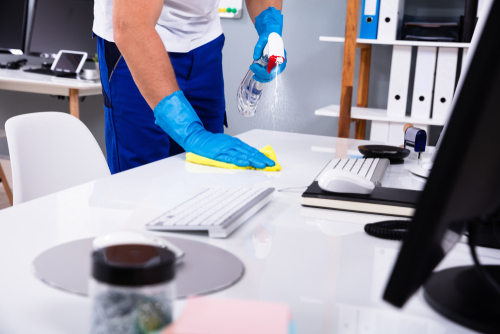
A Shift from Cleaning to Prevention
Today’s standards and expectations are much higher. Surfaces not only need to be gleaming but they also need to be germ and virus free.
Modern infection control is built on prevention. There is no separation of need among cleaning, disinfecting, and sanitizing. It’s all essential. And it’s all part of a system of cleaning to ensure that contaminants are minimized or eliminated entirely. For the most part, this kind of detailed cleaning is done by commercial cleaning services specializing in risk-based hygiene protocols.
These services don’t just perform tasks; they track data, use hospital-grade products, and follow evidence-based standards to reduce cross-contamination in shared environments.
Building a Smarter Cleaning Strategy
The new normal requires plans that are flexible and data driven. Facilities can no longer rely on fixed schedules that repeat the same routines every week. Instead, cleaning frequency and focus should adjust based on building usage, occupant traffic, and risk level. High-touch zones—door handles, elevator buttons, break rooms—deserve daily or even hourly disinfection, while low-use areas can follow measured schedules.
Smart systems now allow facilities managers to monitor this in real time. Sensors can track restroom use or occupancy rates, automatically triggering cleaning alerts when thresholds are met. This data-driven approach helps teams clean only when necessary, saving labor while improving safety.
Integrating Touchless Technology
Tools with integrated touchless technology have become a cornerstone of post-pandemic designs. Organizations can incorporate everything from automatic faucets that turn off and on with the wave of a hand, to soap dispensers with movement sensors, and flush valves that eliminate the need for acrobatic moves in order to avoid touching the toilet handle afterward. These provide mountainous benefits in terms of reducing contact-to-contact infection. Many facilities are taking things up a notch by the installation of motion-activated lighting, automatic doors, and self-opening waste bins.
These small adjustments have large effects. By reducing shared touchpoints, facilities protect both employees and visitors while also sending a visual signal of care and innovation. When people see that technology supports hygiene, confidence rises naturally.
Upgrading Air and Surface Protection
Infection control doesn’t stop at surfaces. Airborne transmission became one of the memorable lessons during the pandemic, and now it’s still informing the future of facility design. High-efficiency particulate air filters, UV-C disinfection systems, and increased air exchanges per hour are becoming the standard features where new construction or remodeling is happening in workplaces, schools, and public buildings.
The pre-pandemic standard of regularly assessing ventilation systems remains in place. Ensure filters meet proper standards and that replacement cycles are kept on point. Combining advanced air purification with electrostatic sprayers or antimicrobial coatings on surfaces builds layered protection that lasts beyond a single cleaning cycle.
Training and Accountability
Technology and strategy mean little without people who understand them. Staff training has become central to modern hygiene programs. Everyone from custodial workers to supervisors needs to know proper dwell times for disinfectants, correct dilution ratios, and how to handle biohazard disposal.
Documentation also matters. Checklists, cleaning logs, and digital verification tools help track compliance and performance. This not only keeps facilities accountable but also provides proof of commitment to health for visitors, tenants, and employees.
Communicating Confidence
The most effective infection control programs work quietly in the background but speak loudly in results. People notice clean spaces even when they don’t realize it. The sight of stocked sanitizer stations, sparkling restrooms, and touchless fixtures tells a story of care. Posting visible cleaning schedules or “last sanitized” signage helps reinforce that message.
Occupants today value transparency. They want to know that the spaces they use are protected by protocols that go beyond the bare minimum. Communicating those efforts builds trust, and trust brings people back. The new normal isn’t about temporary measures; it’s about permanent progress. Facilities that embrace this mindset will stand out as places people trust to work, visit, and thrive in safely.
Michael Bruckler is vice president of sales and marketing at Enviro-Master, which offers a variety of commercial cleaning services to every industry. Bruckler is a results-driven leader with 15+ years of experience in sales and operations. At Enviro-Master, he leads strategic initiatives to enhance efficiency, team performance, and business growth.