
Hurricanes, tornados, and severe thunderstorms are just a few examples of extreme weather events that can cause structural damage and significantly disrupt operational continuity. Downtime, lost production, critical infrastructure damage, and threats to human safety are all serious possible outcomes.
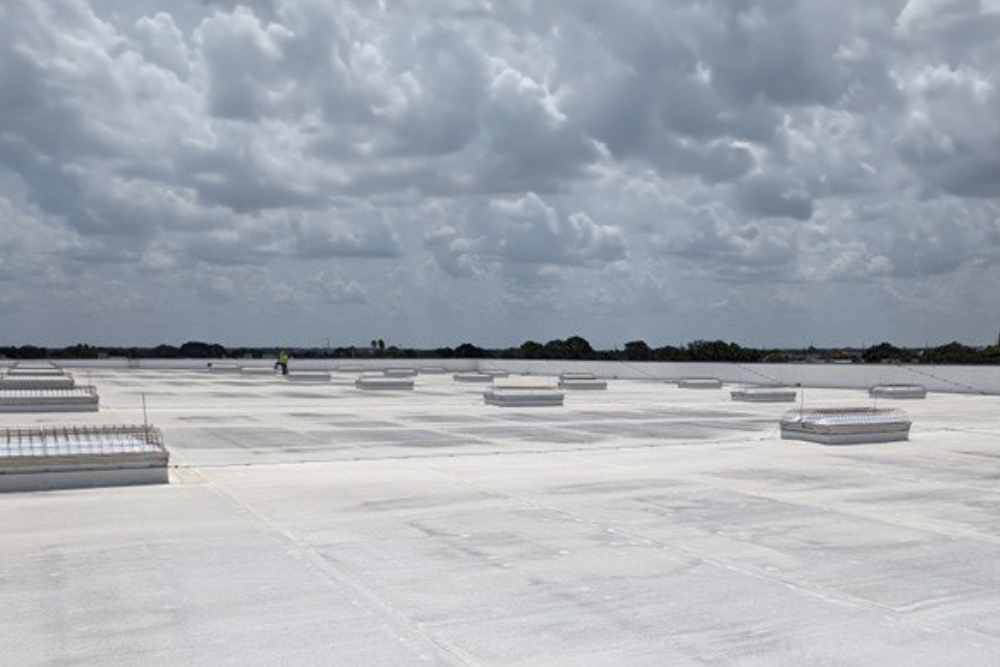
Mitigating these risks can be done in several ways, but one of the most important and obvious areas to invest in for severe weather protection is right above your head—your commercial roof.
Commercial roof systems, available in a variety of different material choices, thicknesses, and compositions, are your building’s first line of defense against the elements. They protect people, equipment, and productivity from light spring rains to punishing severe storms. Failure can result in major consequences.
For facilities managers, the seasonal shift from the winter months to summer brings with it the opportunity to evaluate the current state of your roof and its ability to protect your operations ahead of storm season. In this article, we’ll explore common reasons for roof failure under extreme weather, how different roof materials perform, and proactive maintenance and inspection measures you can take to ensure your roof is best prepared.
Severe Weather Threats to Commercial Roof Systems
For several reasons, high winds have the potential to be one of the most damaging threats associated with severe storms.
Windward perimeters and corners (i.e., where your roof system meets the building’s edge) are typically the first areas to fail under high-speed wind conditions. If the edge details securing the roof membrane to the structure have not been properly installed or have deteriorated over time, winds can infiltrate underneath the membrane itself—potentially allowing it to tear, peel away, and possibly result in total roof failure. High-integrity roof membranes should be able to resist such tearing even in the face of significant wind stress.
High winds can also yield flying debris, which is a serious threat to the integrity of your roof system. Tree branches, fencing, vinyl and metal siding, sheet metal, scaffolding, and vehicle parts are just some of the items that can be picked up by tornado- or hurricane-force winds and thrust onto the roof membrane, with the ability to cause significant tearing or abrasions. This damage is what allows water infiltration, making durability, tear- and puncture-resistance important qualities to look for in your choice of a roof membrane.
Beyond wind, lightning is another storm condition that can damage your roof system. Lightning strikes present a fire risk, and if a flame ignites, it has potential to spread to other parts of the building. For this reason, some roof membrane materials demonstrate greater resistance to ignition and flame spread, something to consider when specifying a roof system.
Finally, there is hail to consider. Hailstone strikes may lead to immediate punctures and water intrusion. Specifically, Very Severe Hail (VSH), which is classified as hailstones that exceed two inches in diameter, is a potential and growing threat in some parts of the country. To help mitigate damage, Underwriters Laboratories (UL) classifies roofing material impact resistance from Class 1 (weakest) to Class 4 (strongest) based on resistance to steel ball drops simulating hail. Class 4 is the highest rating, indicating the ability to withstand 2-inch hail.
How Different Commercial Roof Systems Compare
With a better understanding of how severe weather can damage roofs and your facilities, it’s worth comparing the most common single-ply membrane options and how they stack up from a performance perspective, because not all are the same.
For example, thermoplastic polyolefin (TPO) is the most commonly used membrane in the United States, typically for its low upfront cost and acceptable performance in a wide range of building applications. However, when compared to other available technologies, TPO demonstrates some critical performance gaps that may outweigh temporary cost savings.
Ketone ethylene ester (KEE)-based membranes provide a higher performance alternative. Per relevant ASTM testing standards, KEE roof membranes are composed of a strong fiber reinforcement layer and a minimum of 50% high-performance KEE polymer per relevant ASTM testing standards, enabling them to deliver exceptional tear and puncture resistance. TPO membranes are not required to meet this kind of construction standard.
In the face of extreme weather, the difference can be stark. With exceptional durability and performance, flying debris poses less of a threat. KEE membranes will also be less likely to tear or rip at the seams or points of fastening along the roof’s perimeter and corners, reducing the chance for wind uplift and potential total roof failure.
Facilities managers can look to relevant codes and standards for further guidance. The FM Global 1-90 standard (FM 1-90), for example, requires a roof system to withstand uplift pressures of 90 pounds per square foot. It’s a widely recognized benchmark for commercial roof systems and cited in many manufacturer requirements and local codes. Further, many insurers require FM-rated assemblies in high-wind zones. Systems that meet this standard can generally be relied upon for good performance in extreme weather conditions.
Some parts of the United States require elevated wind performance. In an effort to mitigate hurricane damage to commercial properties, the Florida Building Code (FBC) mandates all commercial roof systems to be capable of withstanding specific wind pressures based on the building’s location, height, and exposure category. Such roofing materials and assemblies must undergo rigorous tests, including UL 580, UL 1897, and FM 4474, to verify that their wind uplift resistance meets required standards.
Maintenance Best Practices for Mitigating Storm Damage
Proactive maintenance and inspection practices are important to best prepare your roof for the risks associated with extreme weather.
Spring is an optimal time to ensure your roof has successfully withstood the winter months and remains in good, functional condition. Your inspection will also reveal major or minor issues that may be a liability under storm conditions. Loose, rusted, or missing flashing along the perimeter of your roof structure can contribute to edge failure under high wind loads. You might also uncover improper fastener installation or adhesion failure, loose or disconnected metal edges, open seams, and more. Finding and addressing these issues before bad weather strikes can help prevent potential damage.
Springtime inspection also presents the opportunity to clear any accumulated debris that may already be on your roof system. Removing such items is an easy way to mitigate their potential to cause damage in high-wind conditions.
Depending on the age of your roof system and the severity of any damage discovered, a complete roof replacement might be your best option. If a new roof is deemed necessary, consider what you’ve learned about high-performance roof systems and how they can contribute to the greater resilience of your facilities.
Fortifying your building envelope is a good way to better protect the operational integrity of your business. Ahead of the summer, a high-performance roof system may be the difference between weathering storm season successfully or not.

Tanner Duer, FiberTite senior roof design consultant with Seaman Corp., has more than 10 years of extensive experience in the roofing industry, including roles in business development, project management, and hands-on expertise as a former roofing contractor.