
Editor’s note: FM Perspectives are industry op-eds. The views expressed are the authors’ and do not necessarily reflect those of Facilities Management Advisor.
With the federal Occupational Safety and Health Administration (OSHA) expected to stay on the rulemaking sidelines over the next few years, states are moving in different directions regarding workplace safety. Some are tightening their own rules on issues like heat, ergonomics, and workplace violence. Others are pursuing bills to roll back their requirements that exceeded federal law. For facilities managers responsible for safety programs that often span multiple states, this patchwork is making compliance harder to navigate.

As a workers’ compensation attorney for four decades, I watch these developments with concern. In my experience, when safety oversight weakens at the top, injury claims tend to follow. And employers who treat safety as a cost to cut rather than an investment often end up paying more, not less.
The Choose-Your-Own-Adventure Approach to Regulating Workplace Safety
Workplace safety in the U.S. operates under a dual federal-state framework. The Occupational Safety and Health Act of 1970 created a flexible framework for the federal government and the states to share the responsibility of ensuring safe working conditions. It created OSHA and vested the federal agency with authority to set and enforce nationwide workplace safety standards. However, the act empowers states to assume this role if they choose by developing a “state plan.”
A state plan must be “at least as effective” as OSHA’s federal standards, but states may adopt stricter standards than those required by federal law, leading to variability among states. For instance, California adopted heat illness prevention rules in 2024 that are more stringent than current OSHA guidelines. A state plan is required to pass through multiple levels of review and approval by OSHA before it becomes active.
States can also decide whether their state plans cover only state and local government workers or also private-sector employees. Twenty-one states and Puerto Rico run “full” state plans that cover both private- and public-sector workers. By contrast, the U.S. Virgin Islands and six states—Connecticut, Illinois, Maine, Massachusetts, New Jersey, and New York—have opted to run hybrid plans, in which state and local government employees are covered by the state program while private-sector workers are covered by OSHA’s federal standards. The remaining states and territories, including Pennsylvania (where I practice), Florida, Ohio, and Texas, do not operate state plans and fall under federal OSHA jurisdiction for private-sector workers. In these states, local and state government workers are not covered by OSHA, though many are protected by state safety statutes or other state-law mechanisms.
While states that opt to adopt a state plan assume responsibility for enforcement, inspection, and rulemaking, OSHA is responsible for monitoring and auditing state plans, and it can reassert federal control if a state plan falls short. As with any federal agency, the robustness of OSHA’s monitoring and enforcement activities depends on its funding, staffing, and resources. Unsurprisingly, OSHA has long been understaffed and underfunded; collectively, there are fewer than 2,000 federal and state workplace safety inspectors for roughly 155 million workers.
OSHA typically funds up to 50% of each state plan’s operating costs, with states covering the rest. This funding structure is a pressure point because a state plan isn’t a fully independent system but rather a federally subsidized one subject to a changing regulatory environment. When state legislatures debate whether to create a state plan or expand their existing workplace safety program, they do so against the backdrop of federal dollars that may or may not continue to flow in.
That’s why I’d caution facilities managers against assuming that “state control” automatically means more aggressive enforcement. In some states, it has meant exactly that: California, Oregon, and Washington run some of the most active state enforcement programs in the country.
In other states, however, the current regulatory environment means seizing an opportunity to roll back protections. Kentucky enacted HB 398 in March 2025 over the governor’s veto, barring its state agency from promulgating or enforcing any safety standards that are stricter than those OSHA has promulgated. What makes Kentucky’s move interesting is that the state already operates a full OSHA-approved state plan; HB 398 is not a state opting out of federal authority but a state plan voluntarily capping its own ceiling at whatever the federal floor turns out to be, illustrating the federal-subsidy pressure point I described above.
What the Current Regulatory Landscape Means for Facilities Managers
For facilities managers, the practical impact of our current regulatory environment on workplace safety rules comes down to three takeaways.
First, the rulebook, which already varies meaningfully by state, continues to change. A company operating in California, Oregon, and Washington faces rules regarding protecting workers from wildfire smoke that have no federal equivalent. A company operating in federal OSHA states is working from a thinner federal rulebook, but one that nevertheless includes the General Duty Clause, which requires employers to maintain workplaces “free from recognized hazards that are causing or are likely to cause death or serious physical harm.” Recently, though, OSHA proposed carving out exemptions to this foundational protection, which could further shake up workplace safety enforcement.
Second, OSHA’s financial penalties remain modest, but the collateral consequences are not. As of January 2026, federal OSHA’s maximum penalty for a serious violation is $16,550, and the maximum for willful or repeat violations is $165,514. I have rarely seen fines alone change behavior at large employers because the dollar amounts just aren’t large enough to affect their bottom lines meaningfully.
What changes behavior is what can follow from a citation. In personal injury lawsuits, an OSHA violation is often powerful evidence of negligence, and in some jurisdictions can support a negligence per se theory of liability, which can dramatically improve a plaintiff’s case even though the OSH Act itself does not create a private right of action. If a company is found liable for negligence, its workers’ compensation insurance premiums rise, and any insurance discounts it receives for strong safety programs disappear. Its clients may reassess their contracts, recruiting can get harder when workers tell their friends about conditions at the job site, and news coverage of a fatality or a serious injury can cost a company more in reputation than any OSHA fine ever will.
Third, the workers’ compensation system will absorb whatever the regulatory system misses. Every state has a workers’ compensation law, though Texas is generally regarded as the only state that offers private employers the option of providing workers’ compensation coverage for their employees. When injury prevention weakens, whether through narrower federal rulemaking or state plans tethered to the changing federal floor, the result is more injuries, more claims, higher premiums, and more litigation. That’s a dynamic I’ve watched play out across time and jurisdictions.
The Business Case for Workplace Safety Hasn’t Changed
Amid all this regulatory shifting, the underlying business logic of workplace safety has remained remarkably constant. Business-savvy leaders across industries know that a safe workplace is good for the bottom line. Fewer injuries mean fewer workers’ compensation claims, fewer third-party lawsuits, lower legal bills, lower insurance premiums, and a better reputation among workers, clients, and the community.
The best safety cultures I’ve seen are led by an empowered safety director, funded adequately, and backed by ownership that treats safety as a non-negotiable rather than a line item. A strong safety director assesses the hazards workers actually face on the job, develops and regularly updates their organization’s safety manual, builds baseline and ongoing training programs for every class of worker, creates site audit and inspection procedures, implements emergency response plans, and incorporates safety performance into how workers are evaluated and rewarded.
None of that requires keeping tabs on what politicians and lobbyists in D.C. or your state capital are up to. The facilities that invest in this kind of safety infrastructure are the ones least exposed to the shift in regulatory winds over the next few years. They’re also the ones whose workers are most likely to go home at the end of every shift uninjured.
The Regulatory Ceiling Is a Facilities Manager’s Compliance Floor
Facilities managers navigating today’s regulatory uncertainty would be smart to build their safety program to the standard of the most protective jurisdiction in which they operate. They should assume that federal enforcement priorities will continue to shift, leading to growing state-by-state variation and a changing federal floor.
A safety program designed around the federal minimum is one regulatory pendulum swing away from becoming outdated and noncompliant. By contrast, a safety program designed around the strictest standards on the books will endure regardless of the regulatory environment. The facilities managers who understand this and build safety programs to the strictest standards they encounter will protect their workers, their balance sheets, and their reputations no matter which way the regulatory winds blow.
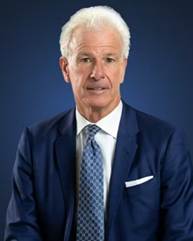
Samuel H. Pond is the managing partner of Pond Lehocky Giordano Inc., a workers’ compensation and social security disability law firm based in Pennsylvania. He can be reached at spond@pondlehocky.com.