
Workplace safety programs have never been more sophisticated, yet when something actually goes wrong, many still fall short.
Organizations have invested heavily in prevention, from training protocols to compliance systems. But when an incident actually happens, many are still unprepared for the most critical moment: the response.

There’s a growing disconnect between the protections employers believe they have in place and how those protections perform when something goes wrong.
That gap, what I like to call a “safety blind spot,” is emerging as one of the most pressing challenges in facilities management today.
The Problem Isn’t Just Risk, It’s Response
In many workplace emergencies, the determining factor isn’t whether the risk existed, it’s how quickly help arrives.
A facilities technician working alone in a mechanical room with no one nearby. A property manager responding to a hostile tenant dispute. A utility worker walking alone to their car after a late shift. These are not rare situations, they are routine parts of the job across industries.
When something escalates in these moments, whether it’s an assault, a fall, or a sudden medical emergency, the clock starts ticking immediately.
And yet, in many cases, there is no direct, reliable way for that employee to signal for help.
Traditional safety strategies were not designed for this reality. They are built to reduce the likelihood of incidents, but often fail to address what happens in the critical minutes after one occurs.
That’s where the blind spot exists.
Lone Work Is Expanding Faster Than Safety Protocols
One of the biggest drivers of this gap is the rise of lone and remote work.
Facilities teams today are more mobile than ever. Staff are spread across campuses, buildings, job sites, and remote locations. Even within a single facility, employees may spend hours working independently in isolated areas.
According to the Occupational Safety and Health Administration (OSHA), nearly 2 million workers are affected by workplace violence each year. At the same time, industries like utilities, property management, hospitality, healthcare, and social services are seeing increased exposure to unpredictable or high-risk interactions.
Despite this shift, many safety protocols still assume proximity, that help is nearby, that someone will notice if something goes wrong, or that a phone call can be made without delay.
In practice, those assumptions don’t always hold.
The Limits of ‘Call for Help‘
Most workplace emergency procedures still rely on a simple expectation: If something happens, call for help. But in real-world scenarios, that’s not always possible.
An employee may not be able to reach their phone, much less unlock it and dial. They may not be in a position to speak safely. They may be incapacitated. Or they may hesitate, unsure whether a situation warrants escalating to emergency services.
Even when a call is placed, delays can occur. Explaining a location or navigating internal communication chains can add critical minutes to response times.
Each additional step introduces friction. And in emergencies, friction often translates into delay. And delay can change the outcome entirely.
Response time is one of the strongest predictors of survival and recovery in workplace emergencies. The difference between a 30-second response and a 10-minute response is not a matter of inconvenience. It can be the difference between a manageable incident and a catastrophic one.
For facilities leaders, this raises a fundamental question: Are current systems designed for how incidents actually unfold, or how we assume they will?
Visibility Is a Critical Missing Layer
Another key challenge is the lack of real-time visibility during emergencies.
Facilities managers are responsible for safety across various complex environments, yet often have no real-time awareness when an incident occurs. Instead, they rely on delayed alerts or indirect signals, often learning about incidents after the fact, or too late.
This lack of visibility creates risk on multiple levels.
Operationally, it delays response and coordination. From a liability standpoint, it raises questions about duty of care. And from an employee perspective, it contributes to a widening expectation gap around what workplace safety should look like.
That gap is becoming more pronounced. A National Safety Council survey found employees report higher exposure to workplace risk in some areas than employers recognize.
As a result, today’s workforce is increasingly aware of safety risks and less willing to accept them as “part of the job.” Employees expect that if something happens, there is a reliable, direct way to get help.
A Shift Toward Real-Time Response
What’s emerging across industries is a shift in how organizations think about safety, moving beyond prevention-only models to systems that prioritize real-time response. This doesn’t replace training or compliance. Those remain essential. But they are no longer sufficient on their own.
Facilities leaders are beginning to ask different questions:
- How quickly can an employee trigger a response?
- What information is available in that moment?
- Who is alerted, and how fast?
- Can response begin without relying on a chain of multiple, manual steps?
These questions reflect a broader evolution in safety strategy, one that understands incidents will happen, and outcomes are often determined in the first few minutes.
What Closing the ‘Safety Blind Spot’ Looks Like in Practice
Addressing the safety blind spot requires rethinking how protection is delivered in real-world conditions, not just how it is documented in policy.
In practice, closing the blind spot means redesigning the path between an incident and a response. That requires:
- Reducing friction: Eliminating the steps an employee must take to signal distress, particularly under stress or physical duress.
- Building in redundancy: Setting up systems so help can be triggered even when traditional communication methods fail.
- Enabling real-time location awareness: Allowing responders to know where to go without relying on an employee being able to communicate verbally.
- Designing for human behavior: Accounting for the reality that people under stress do not follow multi-step procedures reliably.
Some organizations are beginning to implement technologies that support this shift. For example, wearable safety devices are designed to give employees a simple way to call for help in an emergency.
With one press, these wearable panic button devices can simultaneously alert 911 and internal safety or management teams, while sharing the user’s real-time GPS location. Two-way communication can also be initiated, allowing responders to assess the situation as it unfolds, and in more sensitive scenarios, a “silent mode” can enable discreet alerts without escalating the situation or drawing attention.
For facilities and operations leaders, the value of these systems extends beyond the alert itself. The right people are notified directly, without relying on a chain of calls, messages, or guesswork. Response can begin while the situation is still unfolding.
Over time, the data generated from these systems, including response times, incident locations, and frequency, begins to tell a clearer story. It highlights where delays occur, where risks are concentrated, and where safety protocols need to evolve.
That data layer is increasingly valuable not just for safety planning, but for demonstrating duty of care to insurers, regulators, and legal counsel.
From Policy to Reality
For facilities management professionals, this shift is becoming central to operational planning. Safety is no longer just about having policies in place. It’s about whether those policies translate into action when it matters most.
The organizations getting this right are not necessarily the ones with the most comprehensive handbooks. They are the ones who have closed the distance between an employee in crisis and the help they need.
Because ultimately, the effectiveness of any safety program is not measured by what’s written in a manual. It’s measured by what happens in the moment someone needs help.
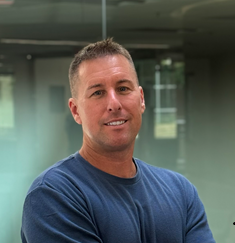
Kenny Kelley is the founder and CEO of Silent Beacon, a workplace safety technology company focused on emergency response and employee protection.