
Retail store theft levels are stabilizing, but external theft and fraud overall continue to rise, according to a new study released by the National Retail Federation (NRF) and the Loss Prevention Research Council. In addition, workplace violence remains a major concern for retailers.
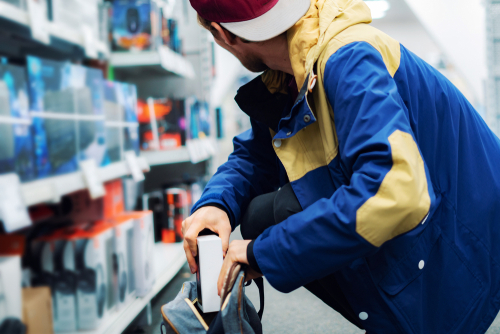
The Impact of Theft & Violence 2026 report found that retailers experienced a 12.4% decrease in shoplifting incidents and an 8.1% decline in retail merchandise theft in 2025 compared with 2024, while other methods of external theft, fraud, and scams increased over the same period. These findings highlight the evolving nature of organized retail criminals exploiting both the physical and digital retail environments.
“After years of rising in-store theft, retailers are beginning to see levels stabilize, driven by investments in technology and employee training to strengthen store security and improve response to these crimes,” said NRF Vice President for Asset Protection and Retail Operations David Johnston. “However, significant challenges remain as organized criminals continue to exploit vulnerabilities throughout the retail environment as seen in the rise of various fraud schemes and thefts including cargo theft, phone scams, and gift card fraud.”
The decline in shoplifting and merchandise theft incidents can be attributed, in part, to retailers’ ongoing efforts to evaluate, implement, and refine security measures designed to deter theft and reduce losses. Strategies like enhanced interior and exterior security systems, as well as store- and employee-specific safety protocols, have contributed to these improvements. In addition, retailers have strengthened their ability to analyze loss patterns and assess the effectiveness of various security measures in addressing different types of theft.
The 2026 report demonstrates a concerning shift as criminals move beyond traditional shoplifting to more sophisticated external theft schemes, with retailers reporting higher rates of repeat offenders (50%), organized retail crime(ORC)-related incidents (40%), and walkout or pushout theft (37%). Fraud is also rising, with phone scams (69%), loyalty fraud (51%), and gift card theft or fraud (42%) increasing.
“Trusted research is essential to understanding these threats and how they continue to evolve,” said University of Florida Research Scientist and Loss Prevention Research Council Executive Director Read Hayes, Ph.D. “As these risks shift and shoplifting rates stabilize, the retail industry must confront the growing challenges of fraud and external theft.”
Violence remains a significant concern for retailers, which continue to report increases in homelessness-related disruptions and guest-related incidents. In response, retailers are strengthening proactive workplace violence prevention efforts by investing in management training (72%), employee training (65%), and risk-intelligence technologies (61%), among other measures designed to enhance safety for employees and customers.
“Retailers are leveraging data and connected technologies to combat retail crime,” said Tony D’Onofrio, president of report sponsor Sensormatic Solutions “This year’s report underscores that no single company can address this challenge alone. Meaningful progress requires strong collaboration among retailers, communities, and law enforcement agencies to enhance asset protection and keep employees and customers safe.”
Consistent with last year, reports of store-related theft incidents to law enforcement remain low, with 63% of retailers reporting fewer than half of these incidents. Retailers cite several factors for not reporting, including low-dollar losses or not meeting felony thresholds (60%), as well as concerns about lack of law enforcement response and follow-through (54%).
Following passage in the U.S. House of Representatives, NRF urges the U.S. Senate to pass the Combating Organized Retail Crime Act, which would strengthen federal coordination and equip state and local law enforcement to better identify and investigate cross-jurisdictional and transnational retail crime groups.
The full report is available here.