
With so many pressing challenges facing the world today, the worsening drought crisis in the United States deserves far more attention. As of late May 2026, more than half the country was experiencing drought conditions. Data shows that roughly 51% of the United States, including Puerto Rico, and about 61% of the contiguous forty-eight states were affected. While severity varies by region, conditions in many areas are expected to worsen as summer approaches.
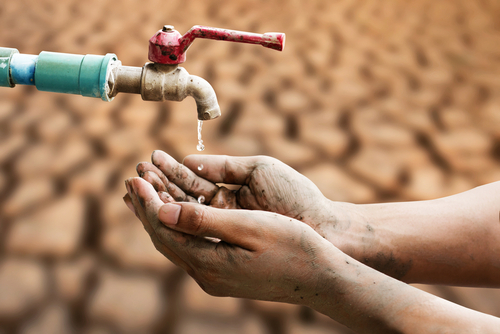
One major factor behind the ongoing dryness has been La Niña conditions that persisted through much of the past winter. La Niña—Spanish for “little girl”—occurs when sea surface temperatures in the central and east-central equatorial Pacific fall below average, often producing warmer, drier conditions across parts of the Southwest and South, regions already struggling with prolonged drought.
The climate pattern is now shifting, though. La Niña has ended. However, meteorologists expect El Niño conditions to develop between June and August, with a 62% chance they will persist through at least the end of 2026. While El Niño brings its own set of weather impacts, it does not necessarily guarantee relief for drought-stricken regions in the South and Southwest. In fact, dry conditions could worsen in the near term.
How Facilities Managers Respond
During periods of drought, facilities managers typically implement a range of strategies to reduce water consumption and improve long-term efficiency. Water efficiency means permanently reducing unnecessary water use while maintaining operational performance. Common strategies include:
- Conducting water audits to identify where water is being used and where waste is occurring. These should be conducted every two to five years.
- Installing multiple water meters so that hard-to-find leaks or suddenly excessive waste can be more easily traced to their source.
- Utilizing water monitoring systems to detect leaks in real time throughout a facility, particularly serious ones.
- Detecting and repairing leaks in restrooms, mechanical rooms, and outdoor irrigation systems.
- Replacing inefficient or poorly maintained cooling towers, which can allow excessive evaporation and significantly reduce water efficiency.
- Upgrading outdated restroom fixtures with high-efficiency toilets that use just 1.28 gallons per flush, as well as waterless urinals that eliminate water use entirely.
- Installing smart scheduling or sensor-based systems for landscape irrigation; watering on fixed schedules often leads to substantial waste.
One important source of water consumption, however, is frequently overlooked: tenants. In many facilities, tenants consume significant amounts of water within their leased spaces, often with little effort made to monitor or reduce that use.
How Tenants Can Help
When drought conditions emerge—especially when local governments impose restrictions— facilities managers tend to focus on common areas, restrooms, landscaping, and mechanical systems. Water use within leased spaces, such as private offices and tenant-controlled suites, is often left unaddressed.
That must change.
In many commercial buildings, particularly office properties, tenants can account for a significant share of total water consumption, especially in spaces with dedicated kitchens, breakrooms, and restrooms. Some facilities managers hesitate to address water use in tenant areas, viewing their responsibility as limited to common spaces. But during periods of drought or mandatory restrictions, every part of a building must contribute to water efficiency.
In some cases, this will require replacing outdated toilets, conventional urinals, faucets, and other plumbing fixtures in leased areas. Beyond equipment upgrades, there are several practical steps facilities managers can take to bring tenants into the effort:
- Educate tenants about current drought conditions, and actively encourage their participation in conservation.
- Provide printed or digital water-efficiency guidelines and handbooks covering simple but effective practices—turning off faucets completely, notifying management of toilets and conventional urinals that are malfunctioning, reporting leaks promptly, and avoiding unnecessary water use.
- Share data on the facility’s overall water consumption and utility costs. Tenants often assume usage is high, but many are genuinely surprised by the actual figures.
- Set water-saving targets for tenants with dedicated kitchens and restrooms, and consider offering incentives or recognition for those who meet or exceed their goals.
Conclusion
Drought is no longer a regional inconvenience—it is a national challenge that demands action at every level, including within the walls of commercial buildings.
Facilities managers who examine water use across their entire property, rather than focusing only on systems they directly control, will be far better positioned to reduce consumption, lower operating costs, and comply with restrictions when they arise.
Tenants are not passive occupants in this effort; they are essential partners. Engaging them through education, transparency, and shared goals is the difference between a partial response and a truly effective one.

Klaus Reichardt is the founder and CEO of Waterless Co. Inc., a company based in Vista, Calif., that provides waterless (no‑flush) urinals and restroom fixtures. Reichardt is a frequent writer and presenter, discussing water conservation issues.