

Editor’s note: FM Perspectives are industry op-eds. The views expressed are the author’s and do not necessarily reflect those of Facilities Management Advisor.
Ask facilities managers about their biggest operational challenges, and staffing consistently ranks near the top. Cleaning teams face unique pressures—and the consequences show up everywhere, from inconsistent cleanliness to rising costs to guest complaints.
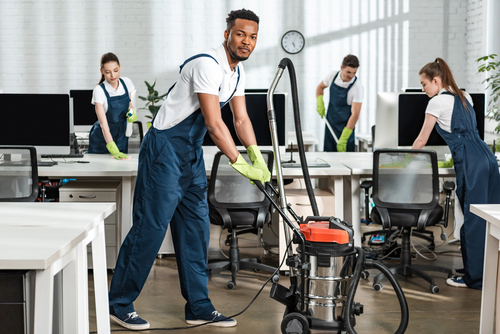
Here’s what operators will discover in 2026: The facilities winning on cleanliness aren’t just investing in better products—they’re creating workplaces where cleaning staff actually want to stay. And that shift starts with understanding how your hygiene investments directly impact retention.
Facilities managers understand that quality hygiene solutions matter—they’re the foundation of every compliant, well-maintained facility. What’s less obvious is how directly these investments connect to staff retention. By equipping cleaning teams with advanced, efficient systems, like high-capacity dispensers, data-driven cleaning tools, and integrated workflows, facilities managers aren’t just improving cleaning outcomes. They’re acknowledging and showing value in maintenance staff’s work by making it physically easier, more efficient, and more achievable.
Yet many cleaning teams are still operating with fragmented systems, outdated equipment, and minimal training. The result? Staff burnout follows naturally. Recent research from Tork reveals just how costly this disconnect is: 80% of cleaning professionals report mental health issues as a result of their jobs, 70% cite inadequate employer support, and 38% have left cleaning positions due to burnout and lack of recognition. Bigger than salary, this is a direct result of being asked to do demanding work without proper tools and training.
The path forward is clear: Strategic investments in both hygiene solutions and staff support create a multiplier effect. Better tools reduce physical strain and increase efficiency. Clear training and workplace recognition boost morale. Together, they drive retention—and retention drives the cleanliness excellence all facilities managers are after. Facilities managers ready to make this shift can put this into action with three concrete strategies.
1. Equip Teams with Tools That Make Their Jobs Easier
The practical foundation for excellence starts with smart product investments. According to a survey of facilities managers and cleaning staff across North America and Europe, 51% of cleaners said that if dispensers were quicker and easier to refill, they would have more time for other cleaning tasks. This isn’t just about efficiency; it’s about reducing physical strain and improving job satisfaction by freeing staff to focus on actual cleaning work. Products designed with ergonomic features and certified for ease of use ensure that cleaning tasks are accessible for all team members, regardless of physical ability.
But it goes beyond just dispensers. The best facilities in 2026 will streamline their hygiene systems so products and processes work together seamlessly. When cleaning teams don’t have to navigate fragmented systems or learn numerous protocols, they work more efficiently and make fewer mistakes. Simplified, integrated solutions reduce cognitive load, minimize training complexity, and allow staff to develop deeper expertise in their role—directly impacting both staff satisfaction and cleaning quality.
The physical demands of cleaning work are real. Joint strain, repetitive motion injuries, and exhaustion compound over time. Investing in tools that reduce these demands and make the job physically easier directly supports staff wellbeing and longevity in the role.
2. Let Data Guide Your Cleaning Priorities
Connected systems—like dispensers with occupancy sensors and smart refill alerts—address real pain points cleaners face daily: 70% of cleaners said they regularly find dispensers empty, and the same amount report regularly cleaning unused rooms. Data-driven solutions eliminate this guesswork by giving cleaning staff real-time visibility into exactly where and when cleaning is needed. They’re not second-guessing whether a restroom “really needs” another check. They’re following specific, intelligent guidance that optimizes their time and effort.
When cleaning teams have clear, data-driven priorities, they accomplish more in less time. They feel more confident they’re doing their jobs well. And they’re not burning mental energy trying to figure out what needs to be done—the system tells them.
3. Build a Culture Where Cleaning Staff Feel Valued
Many times, cleaning staff are overlooked, undervalued, and working in isolation. The first shift toward retention is recognizing the role as essential.
When cleaning staff see that their work is valued—that facilities managers understand the complexity of what they do—retention and performance improve. They show up with more energy. They take pride in their work. They stay. This recognition doesn’t require elaborate programs. It can be as simple as acknowledging consistent performance during team meetings, sharing positive feedback from guests, or highlighting staff members who lead by example.
Training plays a critical role in this recognition. Too often, hygiene training feels like a checkbox exercise—repetitive, disconnected from real outcomes, and easy to tune out. But training can be a powerful tool for staff engagement when it’s designed thoughtfully. Effective training uses visual, bite-sized content delivered through short videos, infographics, and posters rather than lengthy sessions. It connects protocols to real-world impact, helping staff understand not just the “how” but the “why”—showing them how their work directly contributes to guest satisfaction, facility reputation, and operational success. When staff see the connection between their efforts and tangible outcomes, they’re more likely to take ownership of their work and stay committed.
The Bottom Line
The facilities winning on cleanliness in 2026 will understand that the right equipment is foundational—and that pairing it with staff retention strategies creates real competitive advantage. The stakes are significant: Among facility users surveyed in recent years, 52% took action after experiencing a poor restroom, including leaving a negative review, not purchasing food and drink, or avoiding a facility entirely.
These aren’t abstract metrics; they represent real revenue impact and operational challenges. When facilities make these investments together—equipping teams with the right tools, guiding them with data, and recognizing their contributions—everything else follows. Restrooms stay cleaner. Guest satisfaction improves. Staff turnover drops. And facility reputation strengthens.
Katrin Ferge is a commercial segment manager at Tork, an Essity brand.