
For years, sustainability in manufacturing lived in slide decks, pledges, and long-range targets. As the industry moves into 2026, that era is ending, and what lies ahead is far more concrete, technical, and operational. Sustainability is no longer something companies or facilities promise; it is something they must prove.
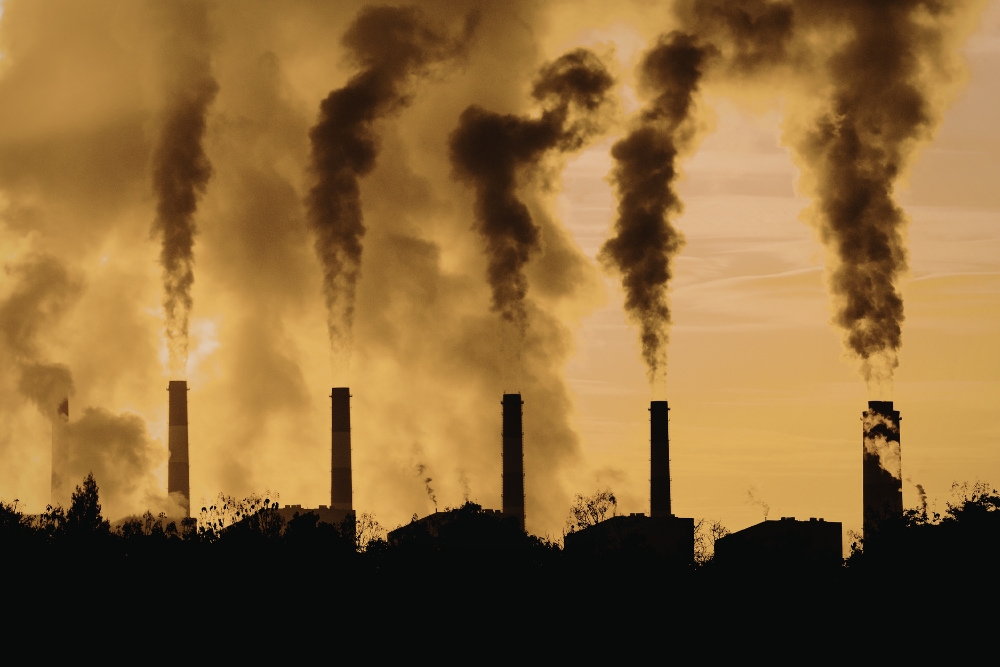
The industry is moving away from greenhushing, where companies keep their eco-efforts quiet to avoid scrutiny, and toward a new standard of auditable molecular data that proves their claims. Regulators are tightening reporting requirements globally, and average industry emissions factors are no longer sufficient. Sustainability data is now being treated with the same rigor as a certificate of analysis, and for leaders responsible for operations and maintenance, this represents both a challenge and an opportunity to directly reduce their organizations’ carbon footprint while protecting competitiveness.
2026: The Year Execution Replaces Ambition
Across the chemical and manufacturing sectors, 2026 is increasingly being described as the year of execution over ambition. Many processes are energy-intensive and difficult to decarbonize, and regulatory pressure is now forcing real action at the plant level.
One major change is the rise of facility-specific carbon accounting. Sustainability teams can no longer rely on generic emissions factors pulled from databases. Instead, carbon data must be measured, verified, and audited. This is driving the emergence of a new role inside organizations, often referred to as the carbon chemist or carbon engineer. This role bridges operations, energy management, and finance to ensure product carbon footprints are calculated using real plant data. One example I’ve seen is companies beginning to open dedicated roles to calculating the CO2 impact of products using advanced software. This shows the increased importance placed on accurately and effectively measuring this impact.
For operations leaders, sustainability is no longer a reporting exercise that is handled by other departments, but is instead becoming part of process control, maintenance planning, and capital investment decisions that must be given increased attention in the new year.
Global Carbon Regulation Becomes a Finance Exercise
Several regulatory frameworks are anticipated to converge in 2026, making carbon footprint a balance sheet issue rather than a theoretical risk for industry leaders.
The EU Carbon Border Adjustment Mechanism (CBAM) entered its definitive period on Jan. 1, 2026, requiring importers to purchase CBAM certificates covering the embedded carbon in products such as chemicals, steel, aluminum, and cement. Default emissions values will be increasingly penalized, placing exporters without facility-specific data at a competitive disadvantage.
At the same time, the EU Emissions Trading System (ETS) is tightening as free allowances are being phased out, and carbon prices are expected to rise significantly. This creates a direct incentive for operations teams to electrify processes, improve energy efficiency, or invest in carbon capture before allowance costs further escalate.
Elsewhere, Singapore’s carbon tax is scheduled to increase sharply in 2026, pushing energy-intensive facilities to accelerate efficiency investments. In the United States, California SB 253 will require large companies to report Scope 1 and Scope 2 emissions beginning in 2026, effectively creating a national benchmark for emissions transparency. Proposed legislation, such as the Clean Competition Act, signals that carbon-based import levies may follow.
Turkey, China, and the United Kingdom are also rolling out or expanding emissions trading systems and border mechanisms, furthering the prediction that carbon data will soon be required everywhere.
For global executives, 2026 represents the end of “voluntary” decarbonization and the beginning of carbon-driven margin compression. The convergence of CBAM, tightening ETS caps, and mandatory reporting across major economies means that companies lacking facility-specific emissions data will face punitive default tariffs that could instantly erode price competitiveness in key markets.
Electrification and Energy Autonomy Moves from Theory to Practice
For the chemical industry, process heat has long been the hardest challenge. Gas-fired steam remains dominant, but 2026 may mark a turning point. The first commercial-scale electric steam crackers, such as BASF’s project in Ludwigshafen, Germany, demonstrate that electrification is technically viable at scale.
Beyond large continuous plants, many facilities are pursuing smaller electrification projects including replacing gas boilers, integrating solar generation, and stabilizing on-site electrical grids. While fully energy autonomous plants remain rare, operations leaders are increasingly evaluating electrification and waste heat recovery not only as sustainability projects but also as tools for cost stability in volatile energy markets.
Despite this, progress remains uneven. Waste heat to power systems are still underutilized across much of the industry. As carbon pricing tightens, however, these projects are changing from optional initiatives to financially defensible investments.
Reshoring and the Shift Toward Modular Chemistry
Reshoring discussions have traditionally focused on geopolitics and tariffs, but a newer driver is now emerging in this space: carbon.
Large centralized production sites carry significant Scope 3 emissions tied to logistics and global supply chains. In response, 2026 is likely to see growing interest in modular and distributed chemical production. Smaller containerized units located closer to feedstocks, such as municipal waste streams or agricultural byproducts, can reduce transportation emissions while improving supply resilience.
For operations and maintenance teams, modular facilities bring new challenges, including higher variability and increased reliance on automation, but they also offer an exciting opportunity to design lower carbon processes from the ground up.
Digital Product Passports and Molecular Accounting
2026 will also mark a critical preparation year in the shift toward digital product Passports, driven by the EU Ecodesign for Sustainable Products Regulation.
This transition from linear production tracking to molecular accounting requires batches to carry digital records documenting recycled content, bio-based feedstocks, and embedded carbon. While blockchain-verified passports may still feel abstract to many operators, the direction is clear: Sustainability attributes will be tracked at the batch level rather than estimated after production.
Facilities that can deliver verified low carbon or circular products will be positioned to capture a premium as downstream industries work to meet their own regulatory requirements.
Agentic AI Moves into the Control Room
Artificial Intelligence (AI) in manufacturing has largely focused on predictive maintenance. In the new year, leaders may finally see a departure as attention is largely shifting toward agentic AI systems. These systems are capable of reasoning across multiple variables to optimize processes in real time.
These tools aim to reduce off-specification production, minimize energy intensity, and adjust operating conditions based on feedstock quality or renewable energy availability. While marketing claims should be treated cautiously, even modest reductions in waste and reprocessing can deliver meaningful carbon savings, particularly in batch-based operations.
While I anticipate that the AI conversation will not be slowing down anytime soon, this new development is designed to provide leaders with decision support tools that make carbon efficiency a controllable parameter alongside yield, quality, and throughput.
Sustainability as Operational Excellence
Taken together, sustainability in manufacturing will no longer sit within corporate social responsibility programs; instead, it will now be embedded in every element of the manufacturing ecosystem from process design, maintenance strategy, and daily operational decision-making.
As a final takeaway, the facilities that succeed won’t be those with the boldest pledges or sustainability promises, but those that can demonstrate at the molecular level that their products and processes are compatible with a net-zero economy. For leaders responsible for operations and maintenance, cutting carbon is no longer an abstract ambition and will become a core measure of engineering excellence and long-term competitiveness.
Paolo Nibioli is vice president of supply chain at MacDermid Enthone Industrial Solutions.